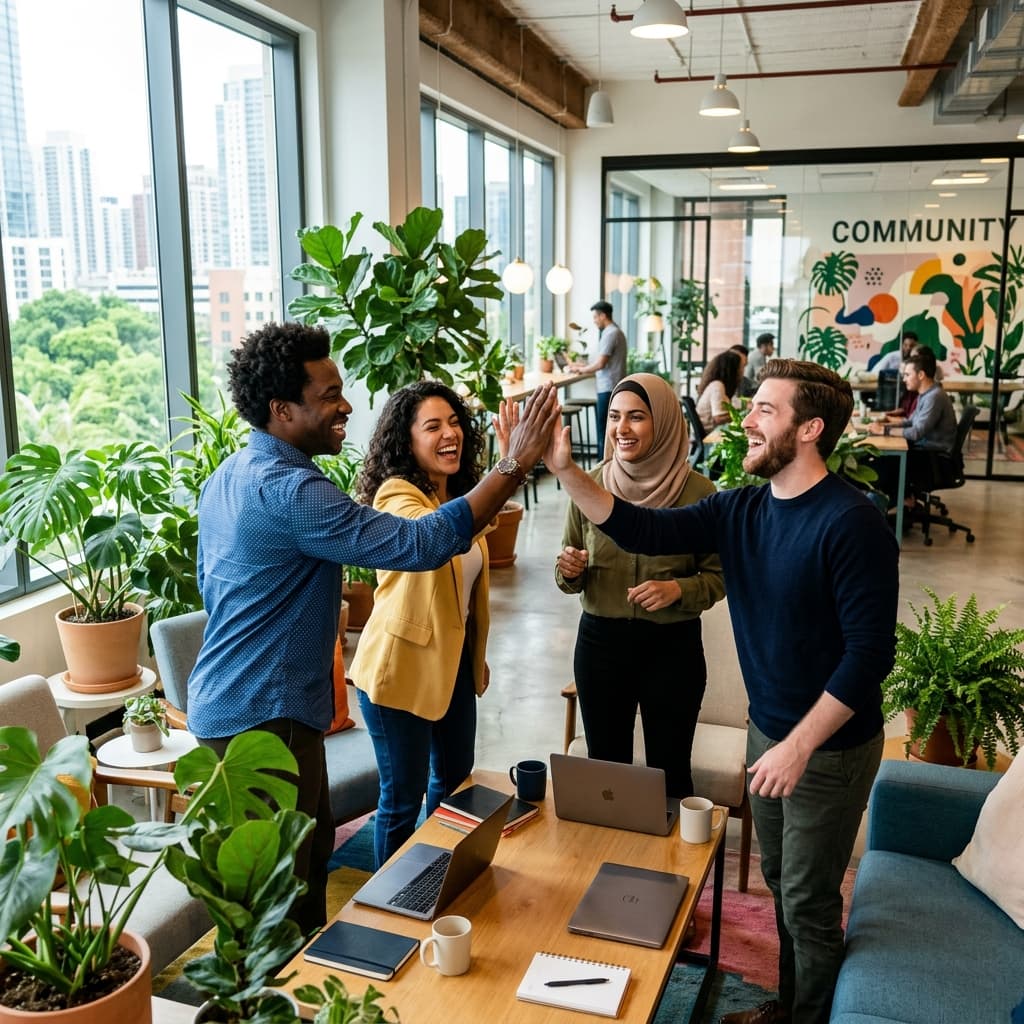
The hybrid model-part remote, part office-is the most challenging cultural landscape ever faced by HR leaders. Without intentional design, hybrid teams naturally drift into two separate, often conflicting sub-cultures: The In-Group (Office) and the Out-Group (Remote).
The Hybrid Equity Principle
Hybrid success is not about "Equality" (giving everyone the same thing); it is about "Equity" (ensuring everyone has the same level of influence, access, and visibility). If one person is remote, the entire meeting must behave as if everyone is remote.
I. The Death of Accidental Culture
In a traditional office, culture is "caught" through osmosis. In a hybrid world, culture must be "taught" and explicitly engineered. This means replacing hallway talk with structured asynchronous channels where everyone can participate regardless of their time zone or location.
1. Asynchronous Rituals
We encourage shifting 70% of internal communications to asynchronous formats. Using long-form internal "RFC" (Request for Comments) documents for major decisions ensures that remote team members have as much time to contribute as those sitting in the office board room.
2. The "Remote-First" Communication Stack
Don't use the office whiteboard. Use a digital infinite canvas (like FigJam or Miro). Don't have side chats in the kitchen about project strategy. If it's worth talking about, it's worth a Slack thread. This simple shift prevents the "Privilege of Proximity" from eroding the culture.
II. Managing the "Power Distance"
There is a natural human bias toward those we see physically. Managers must be trained to recognize "Proximity Bias" during performance reviews and promotional discussions. High-fidelity cultures use objective data and blind peer-reviews to counteract this instinctual favoritism.
"Culture is what your employees say about the company when you aren't in the room-and for a hybrid team, that room is now global."
III. Designing High-Impact IRL Intersection Days
When the team *does* come to the office, don't make them sit in cubicles and answer emails. Office days should be **Maximum Collaboration Days**. They should be for:
IV. Psychological Safety in the Multi-Modal Team
Conflict in hybrid teams is often hidden behind closed Slack DMs. Leaders must create "Safe Exit Ramps" for conflict. This includes monthly "Retro Sessions" where the focus is purely on the *way* the team is working, not the *work* itself.
V. The Role of Physical Space in 2025
The office is no longer a place of production; it is a brand cathedral. It should be a space that inspires, that tells the story of the company's values, and that provides types of collaboration that a home office cannot-like high-fidelity makerspaces or quiet libraries.
Conclusion: The Hybrid Advantage
A successful hybrid culture combined the focus of remote work with the chemistry of in-person interaction. Organizations that master this balance will out-innovate and out-retain their competitors by providing the one thing every 21st-century knowledge worker wants: Freedom with Connection.
The Hybrid Mantra:
"Remote for Productivity. Office for Chemistry."
Mastering this distinction is the key to building an indestructible company culture in the modern era.